Refined Reduction: A Zero-Waste Kimono Sleeve Tunic
A zero-waste pattern puzzle in fit and form. Accepted into the ITAA 2026 Design Exhibition, which reported a 39.3% overall acceptance rate across all levels.
Solving the Fit
The problem
The first-draft main body was too restrictive. It also developed a separate unintended fold along the back; the fold did not cause the restrictive fit.
The solution
Revising the pattern affected the entire zero-waste layout. Rather than discard displaced material, Gracie redistributed the available fabric by increasing the overall sleeve and garment lengths and enlarging the seam allowances.
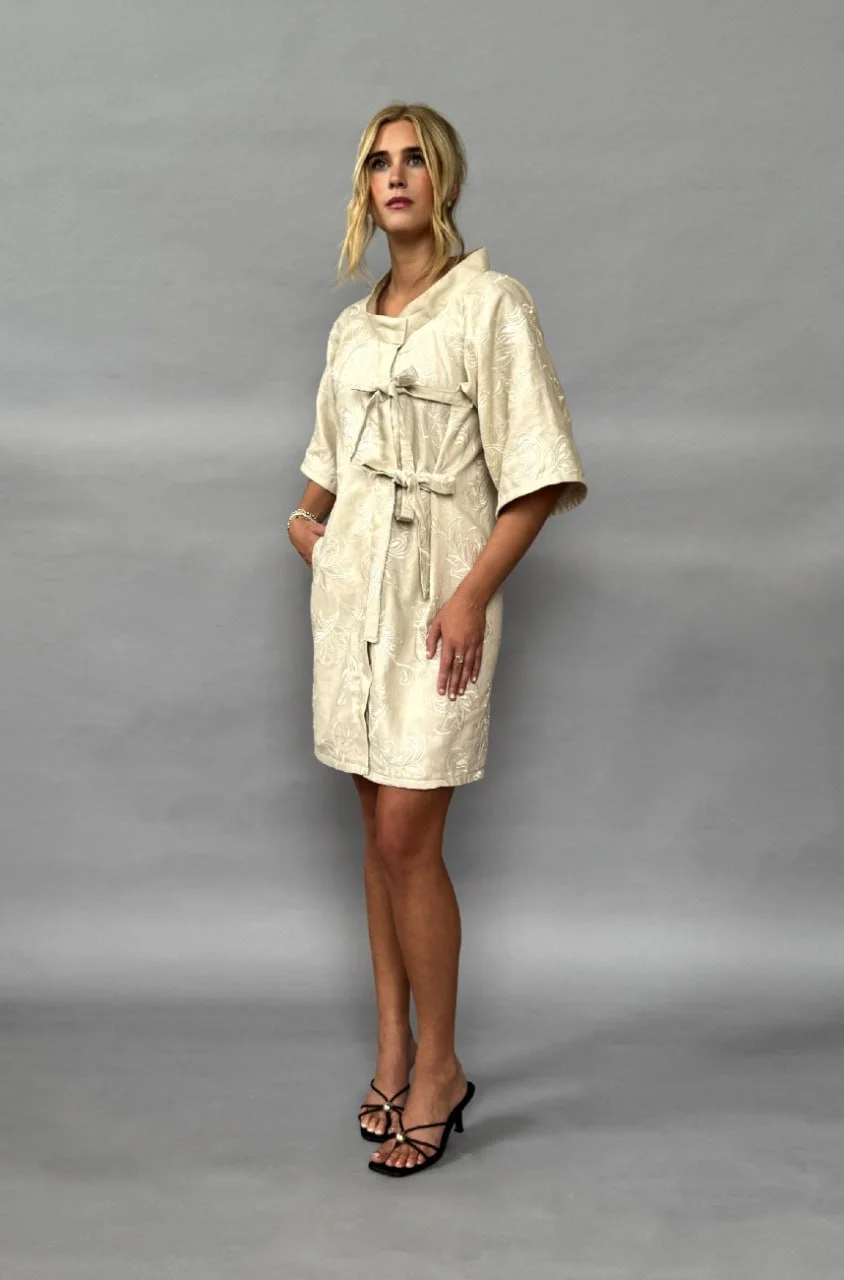
The result
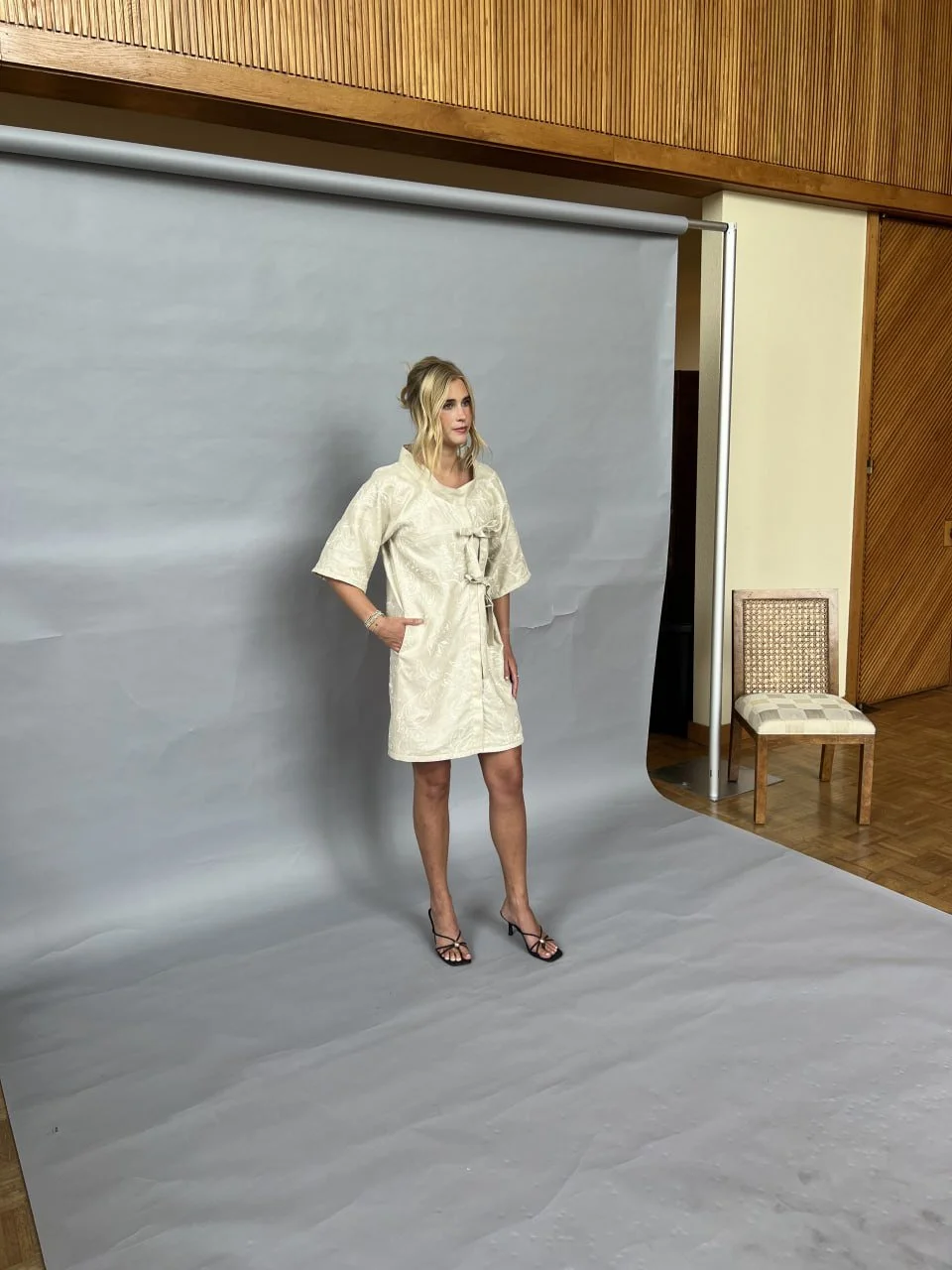
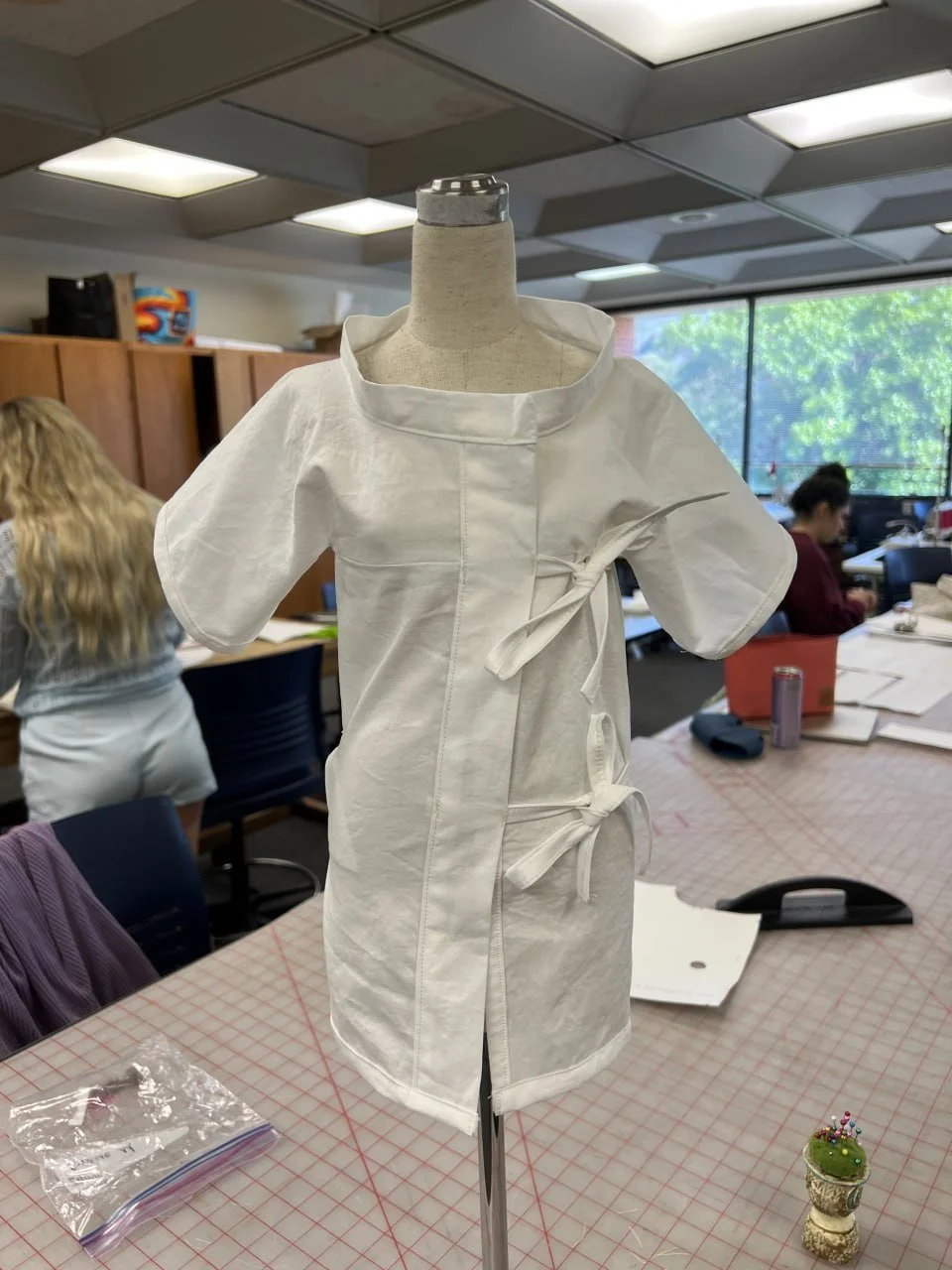
The final garment carries the revised zero-waste layout into a complete form. The solution came from redistributing fabric across the pattern rather than treating fit as an isolated adjustment.
Process: From Pattern to Form
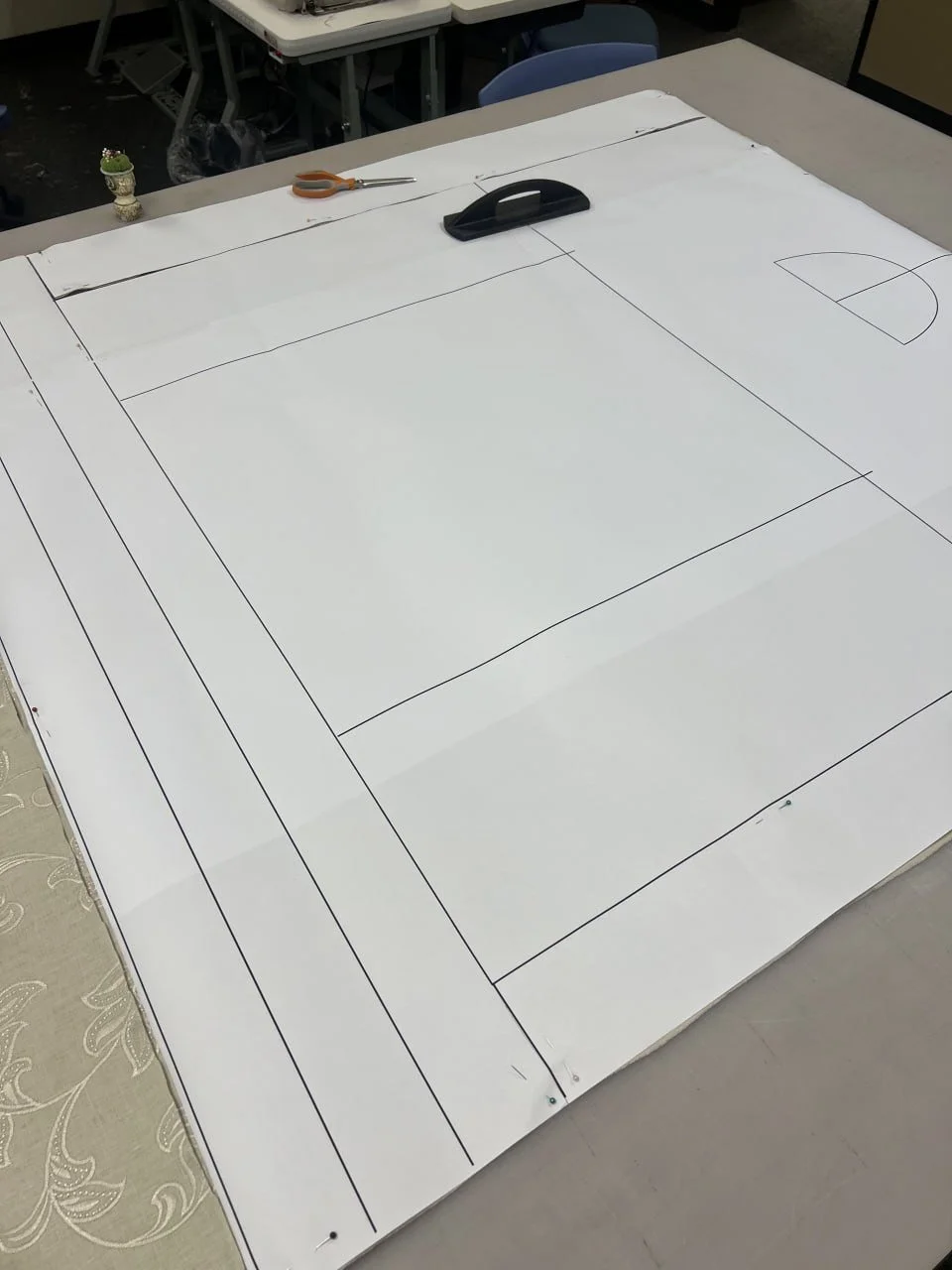
01 — Pattern planning
Zero-waste pattern development works like a puzzle: each pattern piece has to work within the available fabric.
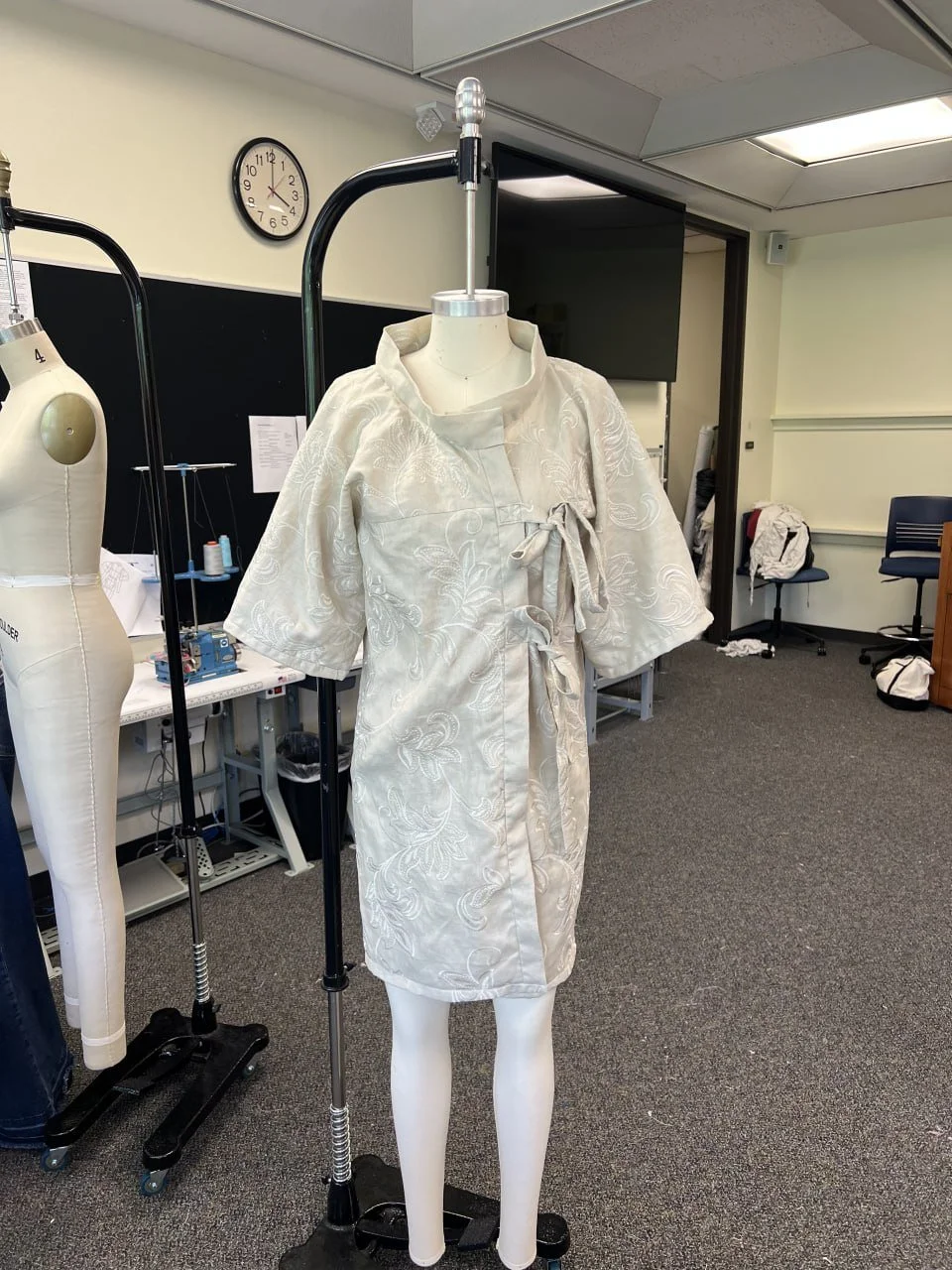
02 — Half-scale development
Gracie made a half-scale version before building the larger finished garment.
03 — Pattern-wide revision
When the first draft became too restrictive, revising one area affected the entire zero-waste layout. She redistributed the available fabric by increasing the overall sleeve and garment lengths and enlarging the seam allowances.